
Ancient Architecture of the Anasazi
In the 1500’s Navajo Indians began to occupy the areas of New Mexico, Arizona, Utah, and Colorado, which later became known as the Four Corners. (A corner of each of the four states meet at Four Corners.) When the Navajo saw the ruins of previous inhabitants, they recognized that those were not the homes of their ancestors, so they called those ancient residents “old enemies,” roughly translated from the Navajo word “Anasazi.” The term “Anasazi” has been widely adopted by archaeologists as the name for the prehistoric people who have inspired a vast amount of study over the past several centuries. There are numerous groupings of Anasazi dwellings in the four states, but two areas have garnered most of the attention of both historians and tourists. Those are the cliff dwellings of Mesa Verde National Park and the numerous “cluster homes” of Chaco Culture National Historical Park.
The Anasazi culture developed between 100 and 1300 A.D. They began as hunter-gatherers, hunting with spears at first because bows and arrows had not been invented yet. Then they began growing corn and squash, carrying water from long distances for their arid gardens, later adding beans to their crops. The Anasazi learned to weave baskets for storage from yucca leaves, as well as creating woven sandals and mats for sleeping.
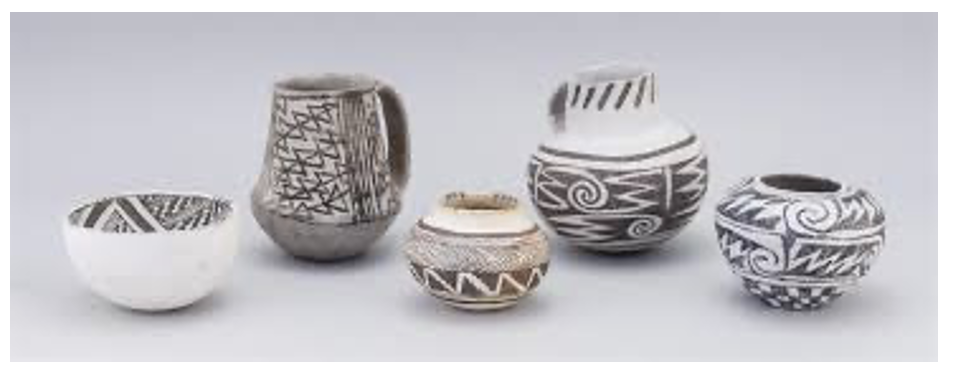
Anasazi became potters, beginning with grey or red clay pots in early years and advancing to highly decorated pots, primarily white with elaborate black geometric designs. Anasazi pots are highly collectable today, selling for many thousands of dollars at antique auctions. Their desirability has led to the destruction of ancient graves by grave robbers, thus leading to it’s becoming a federal offense to steal pottery and other Indian artifacts from federal lands, such as reservations and national parks. “Wanted” posters in Southwestern law enforcement offices call such criminals “thief of time.” Prison terms of twenty years or more may result from being caught desecrating burial sites.
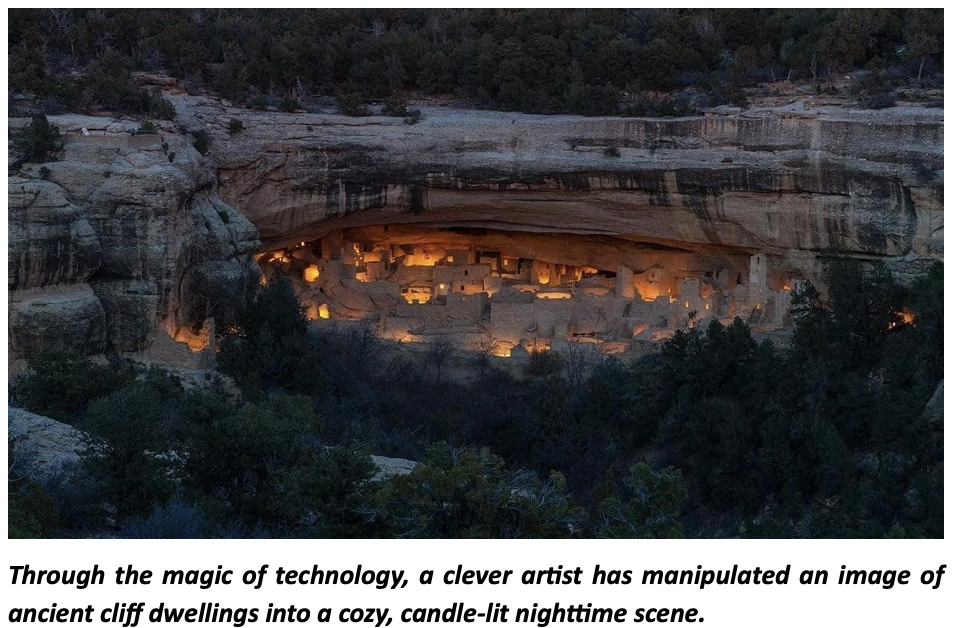
Over 600 remarkable Anasazi structures are tucked into the faces of cliffs in the Four Corners area. These amazing creations are mostly residential dwellings, while a few rounded buildings used for religious rituals are included among the collections of buildings. Mesa Verde National Park is located in southwestern Colorado and includes some of the largest cliff dwellings. Accessing their homes by way of retractable ladders from the surface above, around 125 people occupied Cliff Palace, the largest of these architectural wonders. Balcony House and Spruce Tree House are also remarkably well-preserved communities constructed in the cliffs of Mesa Verde. The residential houses were organized around kivas, the circular subterranean structures enclosed by a roof atop six support columns. The kivas were amazingly similar in construction. The houses contained hearths and small storage areas. The cliff dwellings were located so that they faced the sun, thus providing warmth and light for the Anasazi.
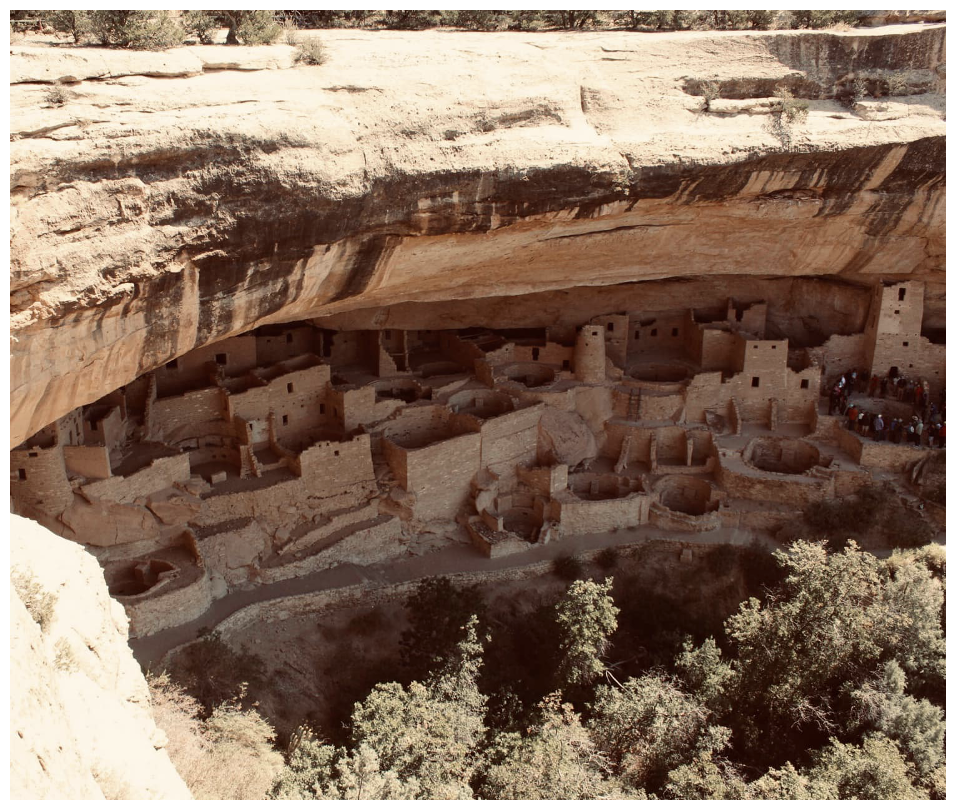
Archeologists surmise that the cliff dwellings were built in hard-to-reach locales to provide protection from the elements, as well as protection from enemies. Luckily for us, the protective areas beneath the cliffs have resulted in our finding some of the most wonderfully preserved artifacts from that era. The cliff dwellings were abandoned around 1300 A.D. No conclusive reason for leaving such carefully constructed homes has been confirmed. Archeologists postulate that the Anasazi migration may have resulted from violent confrontations with other natives due to a lack of resources and because of droughts which we know occurred near the end of the Thirteenth Century.
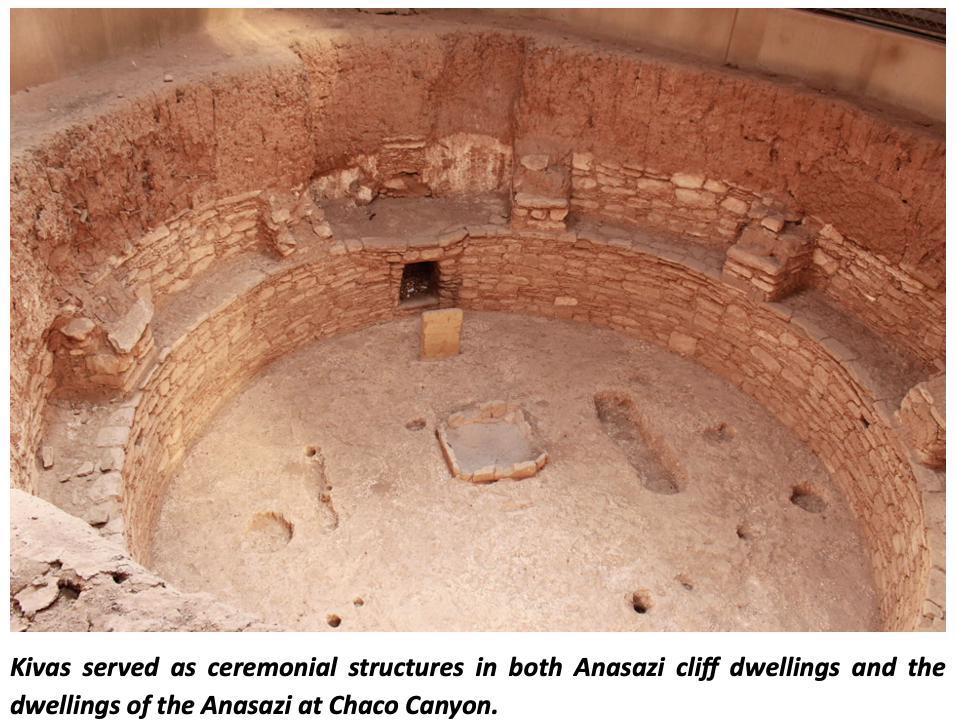
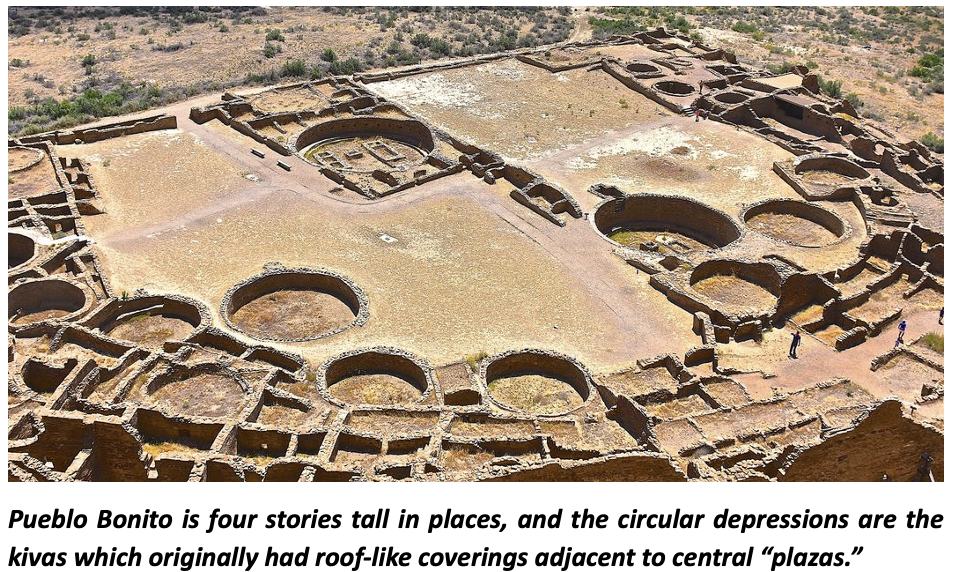
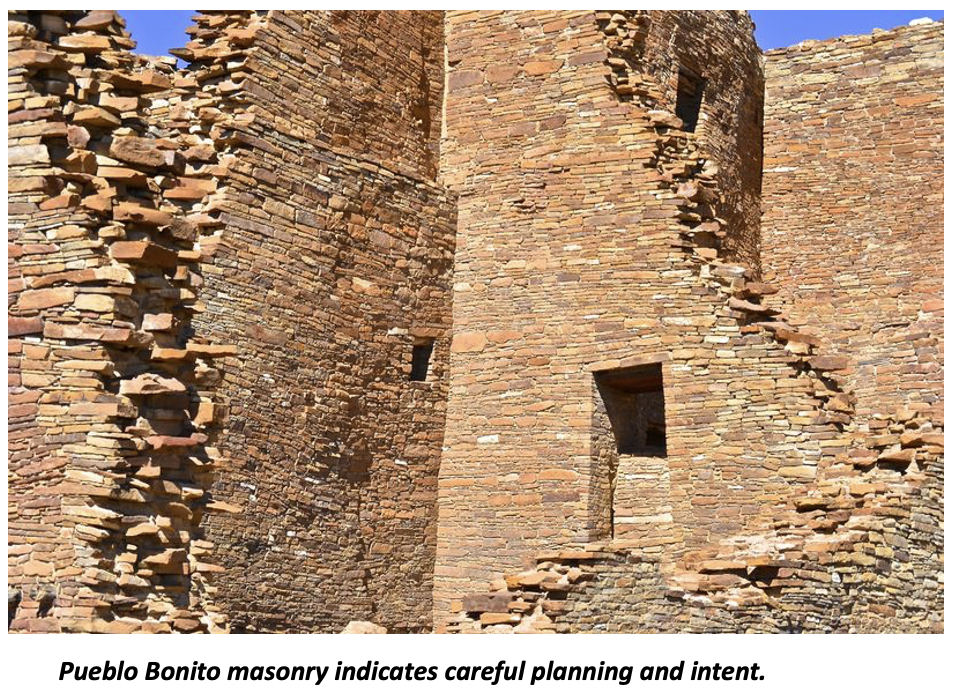
Chaco Canyon was the focus of ceremonials and trade in the Four Corners area between 850 and 1250. The remarkable structures and fascinating astronomical details of their construction have resulted in the Chaco Culture National Historical Park and the designation of the area as a UNESCO World Heritage Site. The monumental “great house” called Pueblo Bonito is the most easily recognizable of the multi-story buildings in Chaco Canyon. Pueblo Bonito contained at least 800 rooms and covered almost two acres. Masonry walls were up to three feet thick and were clad with sophisticated and elaborately layered veneers of carefully dressed sandstone blocks bound by clay mortar. The great size and unusual details of 32 ceremonial kivas seem to indicate that religious ceremonies may have been central to Anasazi life in the many complexes included in Chaco Canyon. Altogether the structures in Chaco Canyon are estimated to have required the wood of 200,000 trees, hauled by workmen on foot from mountains up to 70 miles away.
Turquoise appears to have held considerable significance to the Anasazi, as over 200,000 pieces of the stone have been excavated from the Chaco ruins by archeologists. Tools for creating turquoise beads have been located; and evidence has been studied by scholars, pointing to widespread trade in turquoise. Turquoise was used widely in burials, as indicated by more than 15,000 turquoise beads and pendants unearthed in two burials at Pueblo Bonito.
The residents of Chaco displayed advanced skills in mathematics and engineering in the elaborate system of carefully constructed roads which linked the numerous “great houses” scattered throughout the canyon. Six connecting roads are remarkably straight for great distances, and the 1000 miles of roadways appear to have been extensively surveyed and engineered. Archeologists believe that Pueblo Bonito was the commercial and religious center of 70 or 80 surrounding buildings. The civilization was sustained by gardens which were irrigated by a vast system of canals which distributed water to an otherwise arid area of over 60,000 miles.
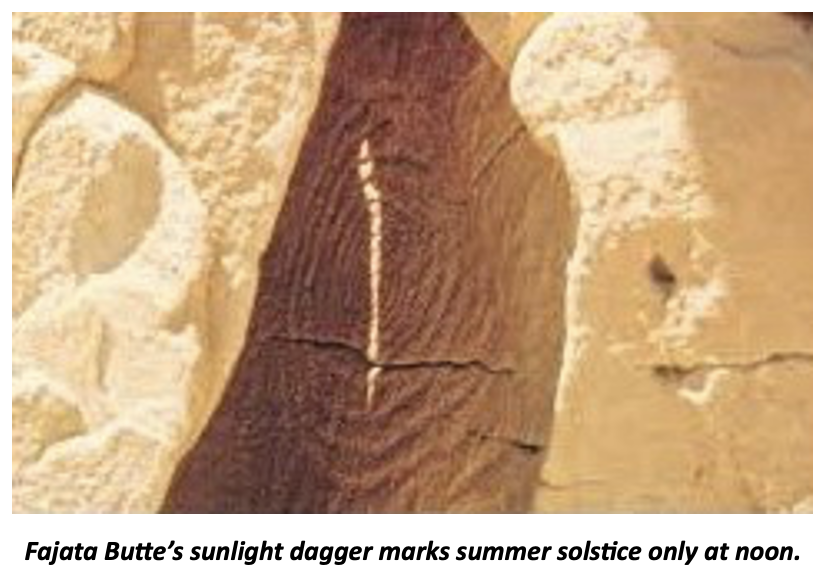
The most mysterious and fascinating details of the Chaco Canyon great houses is the careful placement of at least 12 of 14 principal complexes so that they are aligned with the sun and moon. They are situated on precise east-west and north-south lines, the axis of which recreates the passage of the equinox sun. Doorways are aligned so that the sun rises and sets at the exact center of the openings. Numerous rock formations mark the passage of time according to the sun and moon. For example, on Fajata Butte, slabs of limestone are leaned in such a way as to cover two spirals carved in the side of the Butte. At specific times in the cycles of the sun, a “sword” of sunlight appears between the stones at exact spots on the spirals, marking the summer or fall equinox. The “dagger” moves out on the rings of the spiral step by step each year until the sunlight marks the edge of the spiral. The dagger pierces the exact center of the carved spiral only at noon on the summer solstice. Scholars have speculated for years about the purpose of the Anasazi’s careful study of the heavens and their relationship to Anasazi lives on earth. Suffice it to say that these stone calendars were the work of hundreds of years of study of celestial events.
The mysteries of Chaco Canyon are only hinted at in this article. If you wish to learn more, the finest source of information is a PBS special called THE MYSTERY OF CHACO CANYON, in which narrator Robert Redford unveils the architectural and astronomical brilliance of the Anasazi in the Southwest. The program is available on DVD.
If you wish to visit Mesa Verde, it is easily accessible from Cortez, Colorado. However, Chaco Canyon is not easily visited. It is located about 45 miles south of Farmington, Arizona, but the final 17 miles to the park entrance are unpaved and can be difficult to traverse. June and July are recommended times to visit due to the rough roads and the flash floods which make travel in the area dangerous.